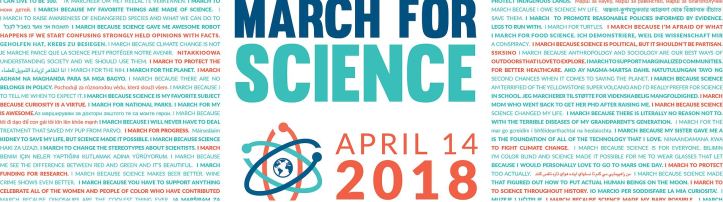
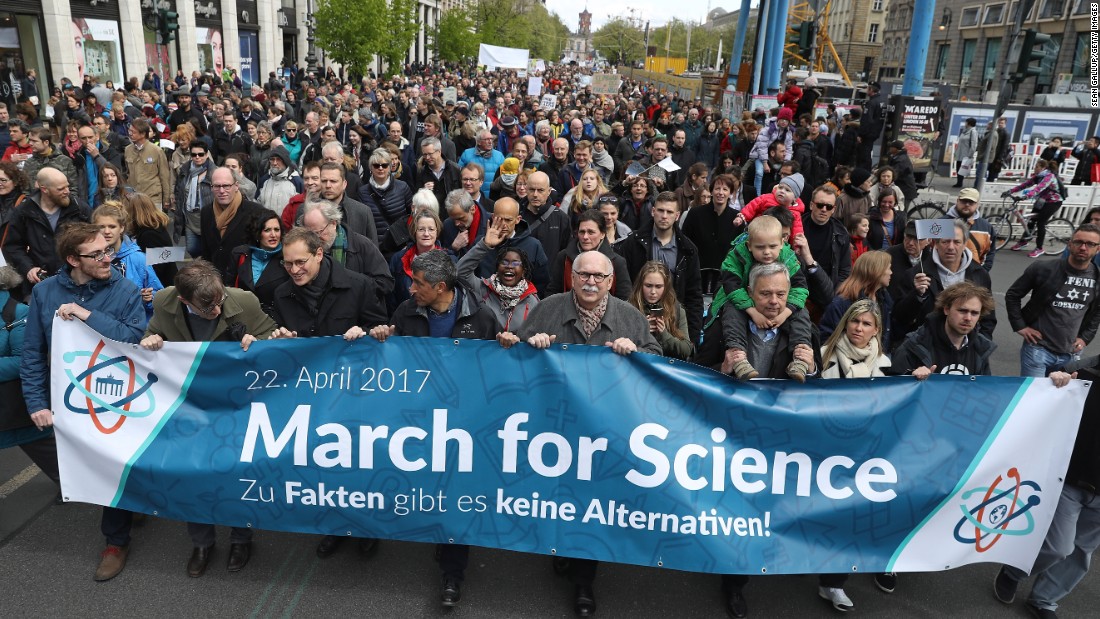
One year later, we are still marching for science. It’s turned into a marathon. Back in 2017, the event was an explosive protest against the new president and his proposed policies cutting funds for major scientific institutions. This year, the marches are smaller, more localized and less spread out. However, the energy still remains. The passion is still there but has taken a different form.
Perhaps this is more of an indication of the movement’s growth rather than its decline. Over 230,000 people are on the mailing list, and key organizers of the March For Science have used the platform to its fullest potential. Many of the emails they send request people to sign petitions for legislation or research on hot issues such as gun violence. More popularized has been their Vote for Science campaign that illuminates new scientific topics every month, such as the environment, health, and agriculture. Caroline Weinberg, one of the March For Science founders, aptly sums up this change:
“Last year the goal was to get people out in support of science. This year we trying to put more emphasis on direct advocacy.”
The power of activism is fresh in our memory–just last month, Congress and Trump passed a bill that drastically reversed all of the budget cuts Trump had proposed earlier in 2017. More on that can be found in my post here. Everyone has seen the response that Congress and Trump had with increasing all funding except for those involved with environmental protection. A lot of people agree with us, and the problem is nearly bipartisan.

March For Science has recognized this and realized that its efforts are best spent facilitating localized efforts for science advocacy. For instance, the organization is holding a summit for activists in Chicago to discuss communication skills, projects around the country, and recruiting techniques. By spreading out to the communities, March For Science can make a more significant impact on different people’s perspectives. Science could be a frightening subject matter, with its complicated intricacy and reputation for being a challenging field. In this way, keeping it local might be just what we need in order to clarify the mysteries revolving science as a whole. A protest is just one large shout, but sometimes the most meaningful impacts come with a conversation.
That’s not to say the walks aren’t happening. This year, there are over 200 marches schedules, with about 50 of those occurring outside the United States. Trump still denies climate change, and that’s one of the largest problems facing our generation today. The election is coming up, and the March For Science won’t stand by idly. It is no longer a relatively impromptu flare of passion released onto the streets. The March For Science has evolved into a global advocacy movement of truth.
I plan to #VoteForScience. Do you?
Source:
 Our Reliance on Science